The Art of Water: Why Your Kettle Matters More Than Your Leaves
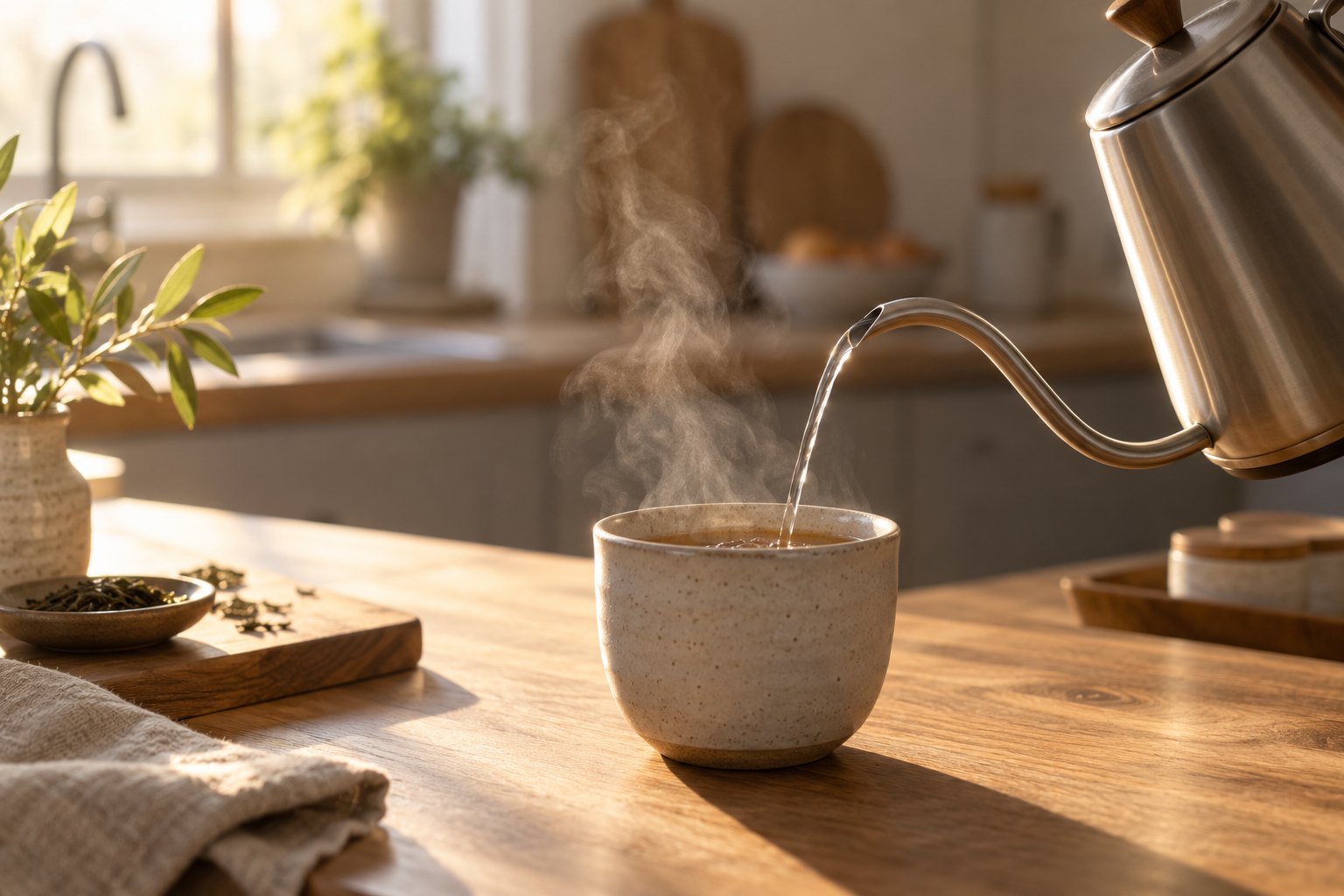
Here is an uncomfortable truth for anyone who has spent a fortune on rare leaves: the single biggest variable in your cup is the cheapest thing in it. Tea is roughly ninety-nine percent water. If the water is wrong, nothing else can be right.
Freshness first
Use freshly drawn water and boil it once. Water that has been sitting in the kettle, or boiled and reboiled, loses dissolved oxygen and turns the cup flat and dull. It is the difference between a bright infusion and a tired one, and it costs nothing to get right.
Temperature is flavor
Different botanicals want different heat. Green teas and delicate flowers prefer water below the boil — pour it too hot and you cook out bitterness. Roots, spices and black teas need a full boil to release their character. A cheap thermometer or a one-minute wait after boiling is the most reliable upgrade most people can make.
What is in your water
Very hard water, heavy in minerals, can mute delicate aromatics and leave a film; very soft or distilled water can make tea taste hollow. A simple filter usually strikes the right balance. If your tap water tastes good on its own, your tea will taste better too.
The kettle itself
A variable-temperature kettle is a genuine luxury for the tea drinker, but not a requirement. What matters is control and freshness — knowing roughly how hot the water is and using it the moment it is ready. Master the water, and even an ordinary blend will taste like you finally understand it.