The Best Countries for Tea, and What Makes Each Distinct
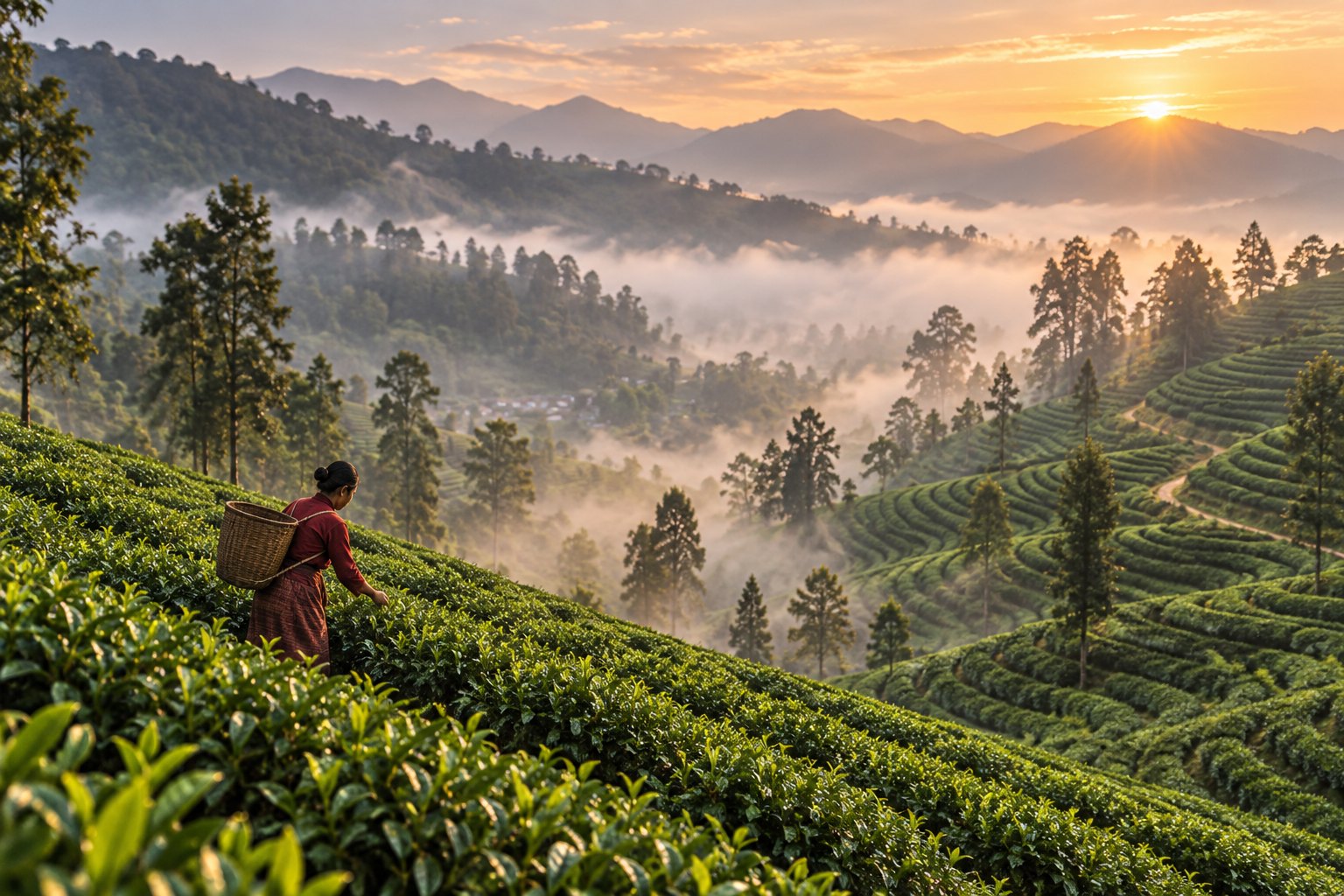
Ask where the best tea comes from and you will get an argument, not an answer — which is exactly right. Like wine, tea carries its origin in the cup. Altitude, soil, climate and centuries of local practice give each region a signature.
China
The birthplace, and still the most varied. China produces every category of true tea, often from traditions tied to specific mountains and villages. Longjing green tea from Hangzhou and the smoky black teas of Fujian are only two threads in an enormous tapestry.
Japan
Japan focuses almost entirely on green tea and does it with obsessive precision. Around Uji, near Kyoto, shade-growing concentrates the sweetness and color that make ceremonial matcha and fine gyokuro so prized. Japanese tea tends toward the fresh, vegetal and umami-rich.
India
Home of two icons: Darjeeling, the delicate, floral tea grown high in the Himalayan foothills, and Assam, the brisk, malty lowland black tea that fills most breakfast blends.
Beyond the leaf
Not every celebrated tea comes from Camellia sinensis. Egypt’s Nile valley grows chamomile and hibiscus of remarkable character; Provence produces lavender with rare clarity. A botanical is shaped by where it is grown. When you taste chamomile that actually tastes of apple and honey, you are tasting a place.
How to taste terroir
Buy single-origin where you can, brew it plainly, and notice what changes. The distance an ingredient travelled matters far less than the standard it was held to at the source.