Loose Leaf vs. Tea Bags: The Case for the Whole Flower
The tea bag was a happy accident — a New York merchant sent samples in small silk pouches in 1908, and customers steeped them whole rather than opening them. Convenience won, and it has been winning ever since. But convenience came at a cost most drinkers never notice, because they have never tasted the alternative side by side.
What is in the bag
Most conventional tea bags are filled with ‘fannings’ and ‘dust’ — the smallest broken particles left after processing whole-leaf tea. Broken leaf has vastly more surface area exposed to air, so it stales faster and loses the volatile oils that carry aroma. It brews quickly and strongly, but flatly.
What the whole leaf does
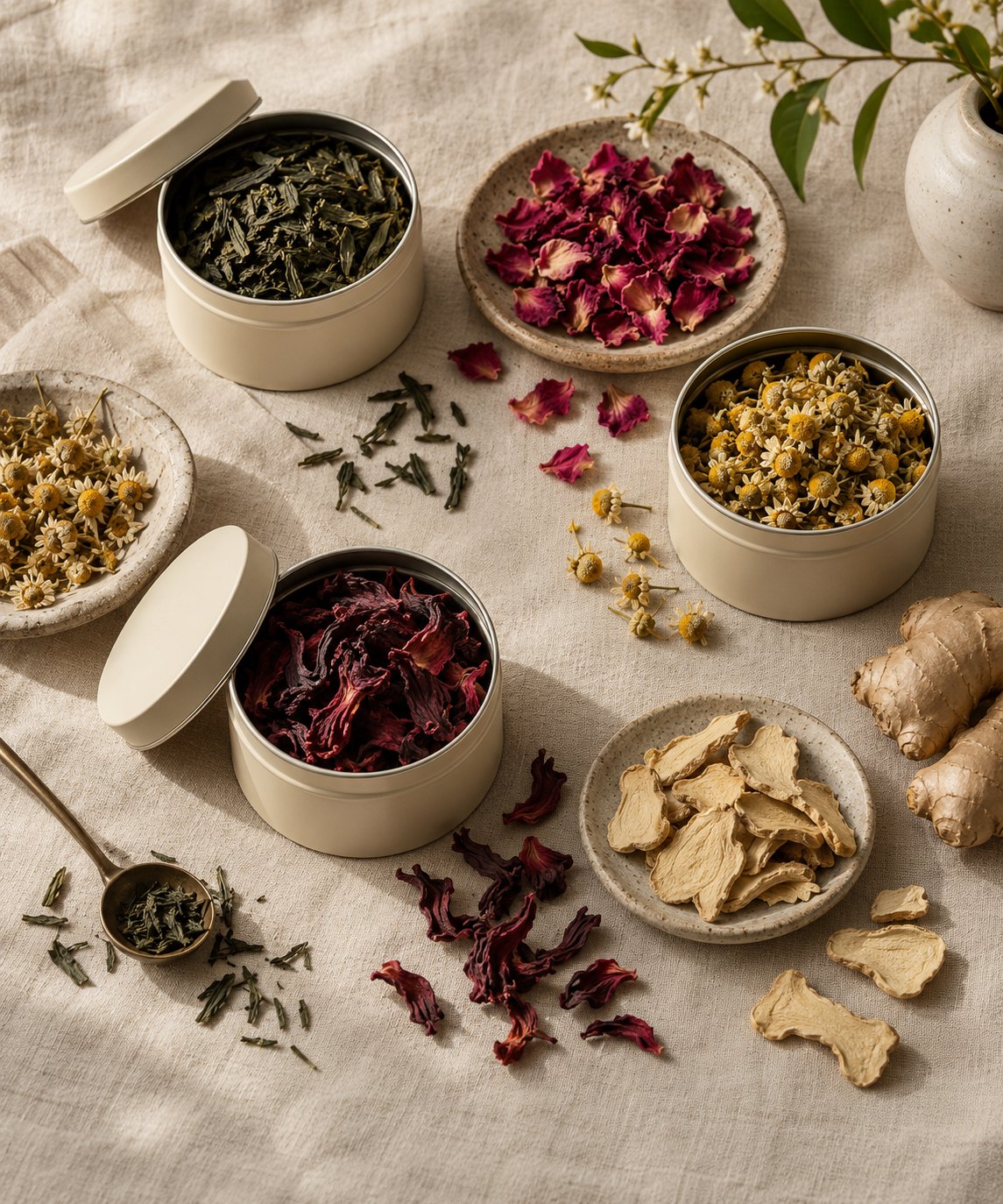
A whole leaf or intact flower keeps its structure, and its oils, until hot water arrives. Given room to unfurl, it releases flavor in layers rather than all at once — rounder, more aromatic, more forgiving. This is why the same botanical can taste dramatically different loose than bagged.
The room to breathe
Loose tea needs space; crammed into a tiny bag, even good leaf cannot open properly. A simple basket infuser, a teapot, or any vessel that lets the leaf move solves this instantly. The gear is cheap. The difference is not subtle.
When bags make sense
There is no shame in a good bag on a rushed morning, and quality whole-leaf pyramid bags have narrowed the gap. But if you have ever wondered why café tea tastes ordinary, the answer is usually in the bag. Try the same blend loose, once, and you will not need to be convinced again.