Chanoyu: Inside the Japanese Tea Ceremony
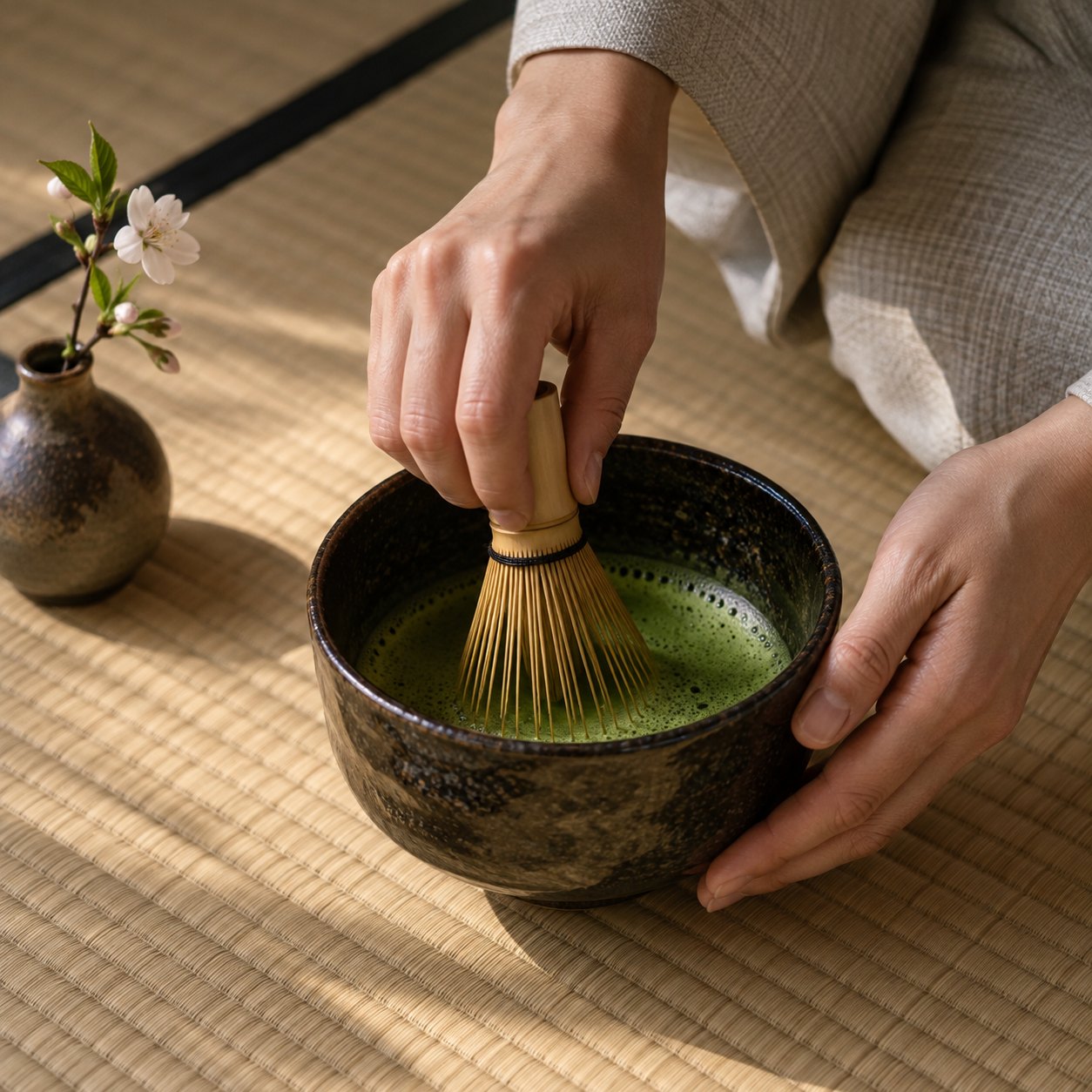
To an outsider, the Japanese tea ceremony can look almost absurdly slow: an hour or more of precise, near-silent movement to produce one bowl of whisked green tea. To understand chanoyu is to understand that the slowness is not a flaw in the design. It is the design.
More than a drink
Rooted in Zen Buddhism and refined over centuries — most famously by the 16th-century master Sen no Rikyū — chanoyu treats the preparation of matcha as a spiritual and aesthetic discipline. Every element is considered: the hanging scroll, the single seasonal flower, the water’s sound, the guest’s path across the garden.
The four principles
Rikyū distilled the ceremony into four ideas: wa (harmony), kei (respect), sei (purity) and jaku (tranquility). They are not instructions so much as a state of mind — a way of being fully present with the people and objects in the room, for the length of a single meeting that will never be repeated in exactly the same way.
Ichigo ichie
That idea has its own phrase: ichigo ichie, ‘one time, one meeting.’ This gathering, these guests, this light, this bowl — none will recur. The ceremony asks you to treat an ordinary afternoon as unrepeatable, because it is.
What the rest of us can borrow
Few of us will train for years to serve tea properly, and we do not need to. The transferable lesson is smaller and available to anyone: make one cup with full attention. Warm the bowl, watch the color, notice the steam. You will not achieve enlightenment over a mug at your kitchen counter — but you may achieve five honest minutes, which is more than most days give us.